Picking the right substrate for your planted aquarium might not seem like a huge aspect of fish keeping– after all, there are loads of bare-bottom tanks out there – but it can make a big difference for the health of your fish and plants. There are several different types that I’m sure you’ve seen: Sand, potting soil, aquarium soil – even pink gravel.
There is no “right” or “wrong” option – it all depends on the look you want to achieve, what plants you’re keeping, even the parameters of your water.
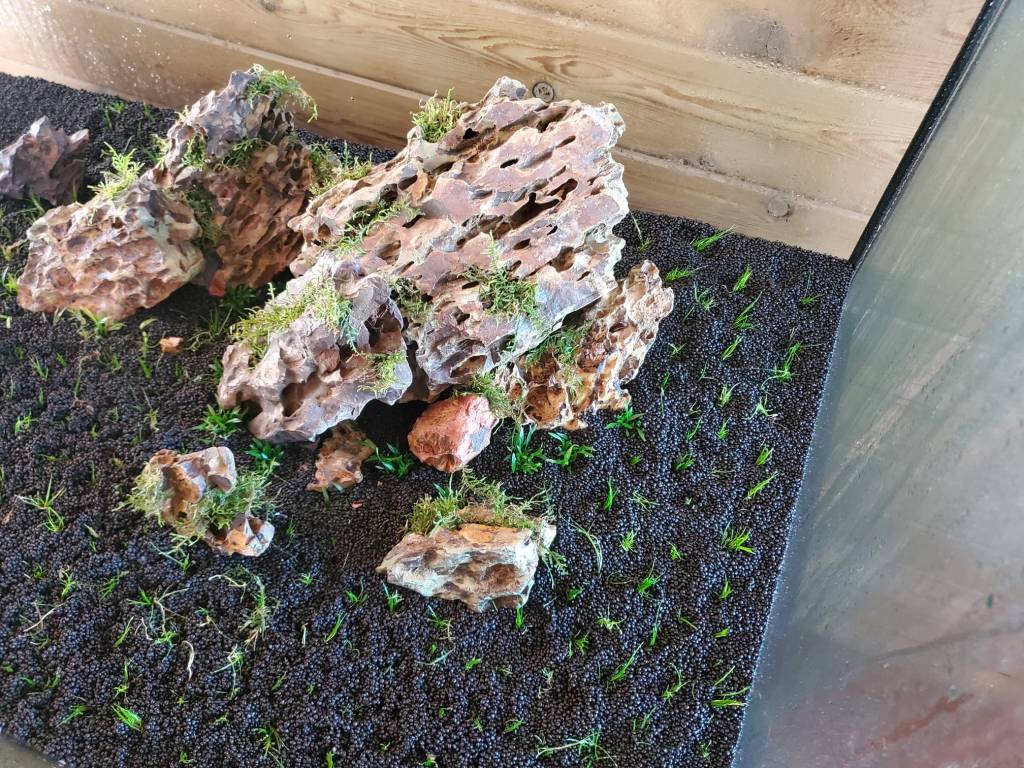
In this article, I’m going to break down the 3 main types of substrate used in the hobby, why it matters, and how to choose the best one for your planted aquarium.
What is substrate and why does it matter?
Substrate is the foundation of your aquarium in many ways.
- Anchoring plants: Substrate provides a stable base for plants to root into, allowing them to anchor securely and grow properly.
- Nutrient source: Certain substrates, especially nutrient-rich ones like aquarium soil, supply nutrients to root-feeding plants.
- Habitat for beneficial bacteria: Substrate acts as a home for beneficial bacteria that break down waste and help maintain healthy water quality.
- For the looks: Substrate adds to the overall look of your aquarium and helps create a natural-looking environment.
There are 3 main types of aquarium substrate that you’ll see as an aquarist: gravel, sand, and aquarium soil.
Let’s talk about each of them.
Types of aquarium substrate
Gravel
Gravel is one of the most commonly used substrates because it’s easy to clean, comes in lots of colors and sizes, and almost every pet store sells it in their fish sections.

The larger diameter of gravel also promotes good water flow through it which prevents debris from settling and eliminates the possibility of dead spots – where there isn’t water flow and anaerobic bacteria starts growing.
But gravel is inert, meaning that it doesn’t provide nutrients for plants. If you have a planted aquarium and keep root-feeding plants like Amazon Swords or Vallisneria, you shouldn’t use gravel as your substrate.
For beginners, this substrate works. But since you have (or want to have) real, living plants, you need something that can sustain them. So you’ll want to consider one of the following substrates instead.
Sand
Sand is a soft substrate that’s perfect for bottom-dwelling fish like corydoras or loaches. It’s also pretty aesthetically pleasing since it gives tanks a smooth, natural look like you’d see in rivers or some lakes.
I’ve grown to love sand and I use UNS Controsand Bora in two of my tanks right now.
One of the downsides is that if you use sand that’s too fine, it can compact over time which can lead to poor circulation through the substrate and the buildup of harmful gasses.
Sand works best in tanks with fish that dig or sift through the substrate or for plants that don’t need nutrient-rich substrates. For example, my 40-gallon blackwater aquarium is full of java ferns and anubias – neither of which are rooted in the sand. It’s only there for the looks.

You can also use sand as a cap for aquarium soils.
Aquarium Soil
Aquarium soil (or aquasoil) is a nutrient-rich substrate that you need if you’re using stem plants, trying to grow a carpet, or any plants that primarily feed through their roots. It provides essential nutrients for plants right from the start and holds new nutrients from root tabs or fertilizers.
Most types also help buffer the water, keeping it slightly acidic, which many plants and fish prefer. The only downside to aquasoil is the price. It’s more expensive than most sands and gravels.

Also in the startup phase, it can also release large amounts of nutrients and can contribute to algae in the beginning. You can try to mitigate this by covering it with an inch of sand as a “cap” so the nutrients don’t leech into the water column.
But aquasoil is a NEED if you want to grow plants in your aquarium. One of the cheapest and highest quality soils I’ve used has been Fluval Stratum which I’ve used to grow most plants from hydrocotyle to vallisneria. If you’re looking for a higher quality soil, UNS Controsoil is my go-to and it comes in different colors and sizes.
Choosing the right substrate for your aquarium
The best place to start when choosing the right substrate for your aquarium is to think about the plants you’re going to keep.
For example, if you’re growing plants that are heavy root feeders like Amazon Swords or cryptocoryne species, you’ll need a nutrient-rich substrate and root tabs.

On the other hand, if you’re planning on keeping epiphytes and other plants that get their nutrients from the water column (think java fern or duckweed), an inert substrate like gravel or sand works fine – if you’re only keeping those.
Also, keep your fish in mind when picking out your substrate. Bottom-dwelling fish like corydoras or loaches prefer a softer substrate like sand to protect their barbels, but aquasoil works as well. Some fish species like to dig, such as certain cichlids, so try to pick a substrate that won’t cloud the water too much when it’s stirred.
How much substrate do you need?
Now that you know what type of substrate you want, how much do you need? A good rule of thumb for planted tanks is to have a substrate depth of at least 2–3 inches.
Here’s a simple formula to help you estimate how many liters of substrate you’ll need:
| (Length of Tank (inches) x Width of Tank (inches) x Desired Substrate Depth (inches)) / 50 = Liters of substrate needed |
For example, if I had a tank 24 inches long and 8 inches wide and I wanted a substrate depth of 3 inches, I’d need to buy roughly 12 liters of substrate.
This is just an approximation. Amounts will vary if you use more substrate towards the back of the tank and less in front. This formula just helps you estimate the amount you’ll need.
Substrate might not seem like the most exciting part of setting up your aquarium, but it’s the foundation of a successful mini ecosystem. It houses beneficial bacteria, feeds your plants, and can even help buffer your water to protect against pH swings.
Here’s a tip before we end: don’t vacuum too deeply in a planted tank. Large amounts of nutrients and bacteria and your plants’ roots live there. You don’t want to disturb that by cleaning too deep.
That’s all I have for today, hope this simple approach helped you pick out your tank’s substrate.
Happy scaping!
Dom
 The Aquarium Home
Leave a comment