If you’re new to keeping aquariums, there’s a very important biological process you need to learn about before you fill your tank up with water and fish. This process is called the Nitrogen Cycle, and it’s the most important process going on in your aquarium.
In today’s article, I’ll walk you through why the Nitrogen Cycle is so important, what it is, and how you can start the process in your tank right (or keep it going if you already have an aquarium).
What is the Nitrogen Cycle?
The nitrogen cycle is a natural process that breaks down organic waste in your aquarium and converts it into harmless chemicals.
Fish waste, uneaten food, and decaying plants, all produce something called ammonia, which is toxic to fish. In a healthy aquarium and in the wild, beneficial bacteria convert that ammonia into NitrIte (less toxic) and then into NitrAte (even less toxic). Here’s a diagram that shows how the cycle works:

Decaying organics and fish waste create ammonia → ammonia is converted into nitrite → nitrite is converted into nitrate → and nitrate is used by the plants to grow → the plants produce organics and decay → and the process starts over again.
Without this cycle, ammonia in your aquarium would quickly build up and make the water too toxic for fish and other aquatic life. The bacteria responsible for this process live in your filter (and the substrate), but it takes time for these colonies to establish themselves.
How to Cycle a New Aquarium
Like I just said, it takes time for the Nitrogen Cycle to start in your aquarium. If your aquarium is younger than a month, it probably hasn’t “cycled” yet and is not safe for fish.
“Cycled” means that the first circle of ammonia into nitrate hasn’t gone all the way around. It takes at least 4 weeks for this to happen in your filter.
There are lots of different ways to cycle aquariums (lots of those you can read about in this forum), but in this article, I’ll only talk about the method I’ve used in all of my planted tanks. Here are the steps I take:
- Plant heavy from the beginning
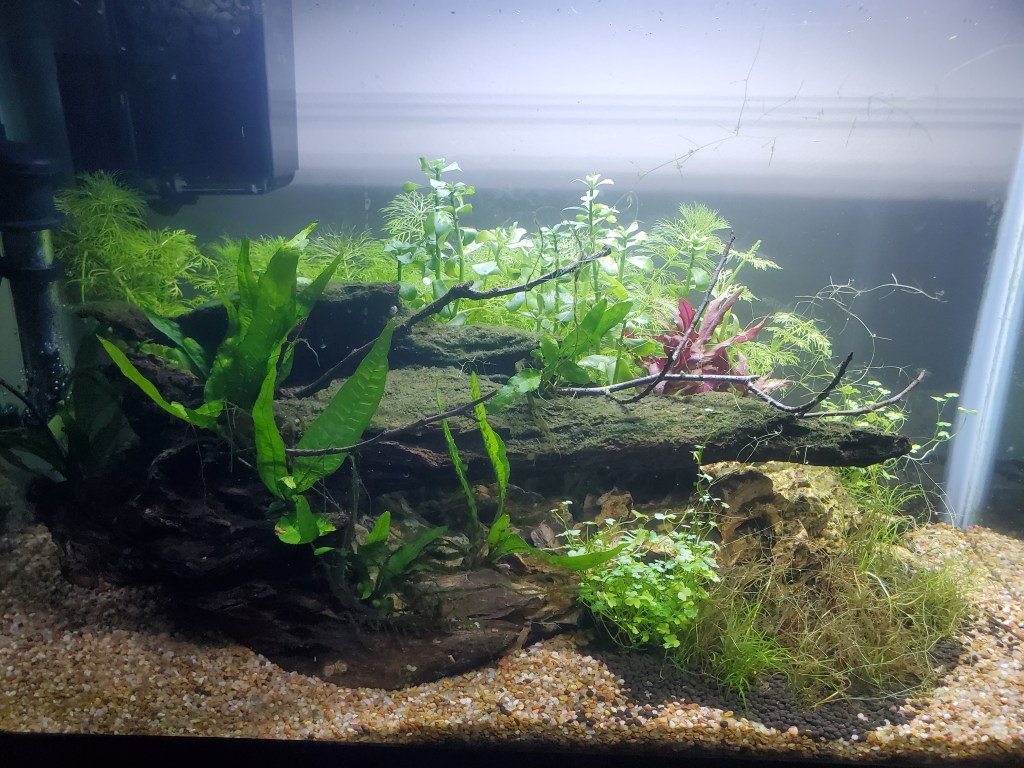
Once I’ve done my research, bought everything, and all my equipment is out in front of me, I start setting up my tank. I plant heavily from the beginning! The heavy plant mass will help combat algae in the early stages, helps deal with excess nutrients, and contributes decaying organics from the adjusting leaves. Plants like Water Lettuce, Bacopa Monnieri, and other fast-growing plants are great for this step.

- Do
dailytwice weekly water changes
After I’ve planted, filled the tank with water, and turned the filter on, I do water changes every day for the first week … at least that’s my goal. Sometimes I can’t do it every day because of my schedule, but I always make a point to do a water change at least twice a week for the first month,
Nutrients leaking from the substrate, wood (if you use it), and plants provide the ammonia to start the cycle and the environment for algae to take off. To protect against wildly swinging water parameters and outbreaks of algae, I do water changes twice a week.
- Scale down water changes over the next few weeks
Once the first week has passed, scale your water changes down to once every other day. So about 3–4 water changes for the second week.
Then on the third week, only do a water change twice. And on the fourth week and beyond, carry out one water change.
It’s important that during this process, you don’t add any liquid fertilizers or fish. This process can be extremely stressful for livestock and can kill them. Also like I said earlier, the substrate will provide all the nutrients your plants need for the first month or so.
You can add fish once you’ve finished the fourth week if you want, but I typically wait until week 6 so I know for sure that bacteria colonies are established in my filter media. You can know this if your Ammonia is 0 and nitrite measures less than .25 ppm. Once you see those numbers, your aquarium is cycled.
How to Maintain the Nitrogen Cycle in Your Aquarium
Once your aquarium is cycled, the bacteria will keep working to break down waste, but these colonies can be wiped out if you don’t continue tank and filter maintenance. Here are two things I do to maintain my nitrogen cycle:

There’s only so much space in your filter for bacteria, and they can only handle so much waste. If you skip out on water changes or overfeed your fish, that waste and build up and become too much for your filter to handle. Those levels of waste and ammonia can kill your fish or lead to algae blooms. So keep up with your weekly water changes!
Clean your filter once every 2–3 months. Algae and debris can clog up your filter hoses or tubes and can restrict the flow of water in your filter. The bacteria colonies in your filter need oxygen to break down waste. If your filter gets clogged or the flow decreases, you’re essentially suffocating the lifeline of your aquarium. I try to clean my filter every 3 months. Here’s a guide on how to clean your filter.
Signs of Nitrogen Cycle Problems
Sometimes there can be a break in your cycle. It’s not very often (hopefully), and it’s usually a result of neglect of one of the two things I mentioned above. In my experience, there are 2 signs that your cycle might be out of balance:
- Ammonia or nitrite spikes: If you notice a sudden spike in ammonia or nitrites, it could mean that your tank’s bacteria population is struggling. This can happen after adding too many fish at once, overfeeding, or if you cleaned your filter too aggressively.
- Fish acting strange: Fish that are exposed to high ammonia or nitrites might show signs of stress like gasping at the surface, clamped fins, or swimming erratically.
If you notice any of these things happening in your tank, don’t panic. Do a water change, gently rinse out your filter, and add an air stone to increase oxygen levels.
The nitrogen cycle is a process that goes on in your aquarium without you really noticing.
Beneficial bacteria break down ammonia created by fish waste into less harmful substances in your aquarium. It takes time for this process to establish itself, and as long as you keep up with water changes and filter maintenance, your tank will be balanced.
I hope thisb guide helped you understand the Nitrogen Cycle more!
If you liked this article and want to be notified when I post new ones, subscribe to my newsletter by filling out the bar below. It’ll take 3 seconds and I’ll send you weekly minute-to-read-it emails on topics like this.
Happy scaping!
Dom
 The Aquarium Home
Leave a comment