
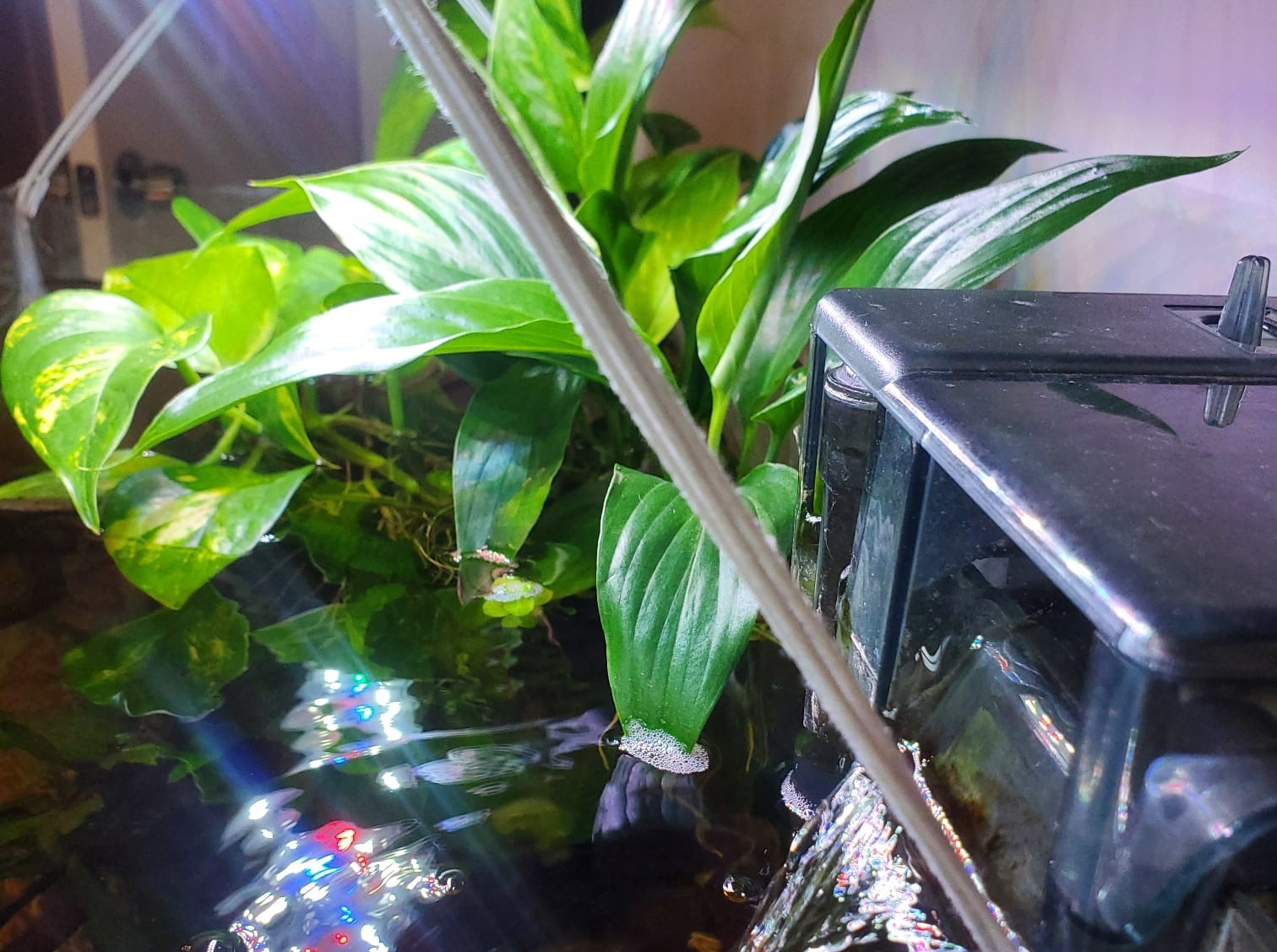
When I first started keeping fish, I started out with one HOB Filter that I used on everything from 10–20 gallons. I thought all I needed was a “one-size-fits-all” filter, some water conditioner, live plants, and an aquarium light.
And honestly, I carried that belief for several years. But then the surface of the water in my tanks always seemed to grow a thick film, or I could never keep one or two spots in my aquarium clear of algae.
Sometimes algae, surface films, dying plants, or fish gulping at the top of the water aren’t a matter of water changes or water quality. Sometimes (maybe even in lots of cases), the real problem is your water circulation.
In today’s article, I’ll talk about water circulation, the problems it could be causing in your aquarium, how to increase (or decrease) movement, and why it’s so important that you get this dialed in.
What’s the Problem With Poor Water Flow?
For the sake of this article, I’m going to define “poor water flow” as either too much water movement or not enough. A current that’s too strong for your aquarium can be just as harmful as one with still water.
Right now, I’ll talk about the dangers of both.
Your Aquarium Could Suffocate Without Water Flow
That’s a little bit of an exaggeration, because you can have an aquarium with no filters that can thrive, but those methods are typically reserved for more advanced aquarists. Generally (and I recommend this) your aquarium needs water flow to circulate nutrients, oxygen, and waste.
Without enough movement, the water can’t bring oxygen to your fish, spread heat and nutrients to your plant, or carry waste to your filter. That means certain areas – called dead spots– start to build up waste and get low oxygen. That can become a big problem because:
- Plants might rot or grow unevenly (since they’re not getting nutrients)
- Algae can grow more easily in these spots
- Ammonia can spike
- The water can smell bad or turn cloudy
- Fish can get sick or even die
The most common dead spots are behind objects (like driftwood, rocks, or decorations) or in the midst of dense planting. So remember to trim your plants!
In summary, not enough circulation = dead spots.
Too Much Water Flow Can Exhaust Your Aquarium
On the flip side, too much flow can also be harmful.
Most fish and plants in the hobby come from places with calm water. So if your water is constantly moving too aggressively, you could uproot plants, fish could become exhausted from swimming against it, or your substrate could get disturbed and uneven.
So, how can you find the sweet spot?
Let Your Aquarium Decide the Flow For You
This is my 40-gallon aquarium:

I’m running the Fluval 407 Canister Filter on max flow, even though it’s rated for 50–100 gallons and my tank is “smaller” than the recommended size. Why is that? Wouldn’t there be too much flow?

Not exactly, for 3 reasons:
- I use a lily pipe to disperse the outflow evenly and gently
- It’s densely planted, and it softens the output
- My fish don’t mind it at all
My point is this: watch your aquarium and decide for yourself if there’s too little flow or too much.
The same tank above had a stubborn blue-green algae problem on the back left side of the tank and on the driftwood towards the front. I knew BGA loved stagnant areas, so over a couple of weeks, I increased the flow of my filter. I went from 50% flow to the valves all the way open, while checking on my fish to make sure they weren’t fatiguing.
I don’t have the BGA anymore, and my fish aren’t exhausted. Great, right? So where do you start in terms of circulation to get a good idea of a baseline?
How Much Flow Is Enough?
A good place to start is to find a filter that can “turn over” your aquarium’s volume 5–10 times per hour. Simply, that means:
- 10-gallon tank → 50–100 gallons per hour (GPH)
- 20-gallon tank → 100–200 GPH
- 40-gallon tank → 200–400 GPH
For a guide on what type of filter is best for you, read my article here.
Another good way to measure is to make sure all the plants in your aquarium are swaying gently, not whipping around or sitting still.
Maybe you know all of this, and you’re either trying to increase your flow or decrease it. Here are some tips for both:
To Increase Flow:
- Upgrade to a more powerful filter
- Add a powerhead or circulation pump
- Use air stones for bubbles and surface movement
- Remove decorations or plants that block flow
To Decrease Flow:
- Switch to a sponge filter (especially for shrimp or baby fish)
- Add a sponge pre-filter on the intake
- Angle the filter output at the glass or use a spray bar
- Add rocks or plants to break the current
Don’t Just Go With the Flow
Water circulation is a crucial aspect of keeping a healthy aquarium – don’t skip over it!
It plays a huge role in keeping your aquarium clean, safe, and balanced. It brings in oxygen, moves nutrients, and helps your fish and plants feel at home. But balance is everything—too little flow, and things get stale. Too much, and your tank becomes a washing machine.
Take time to learn about your fish and plants. Watch how they behave. And don’t be afraid to adjust your setup until everything moves just right.
Happy scaping!
Dom
Leave a Reply