When you’re starting or upgrading your aquarium’s equipment, there are lots of things to consider. The most important of these (in my opinion) is the filter.
Your filter is home to most of the beneficial bacteria in your tank, provides circulation, and breaks down the unseen chemicals that could be toxic to your fish.
There are three types of filter commonly used in the hobby. Those three are:
- Hang on back (HOB) filters
- Canister filters
- Sponge filters
In this article, I’m going to show you each of their functions, how you should care for them, the aquariums they’re used on, and at the end, I’m revealing my favorite filter that I’ve used on almost all my tanks.
Filters do more than just keep your water clear
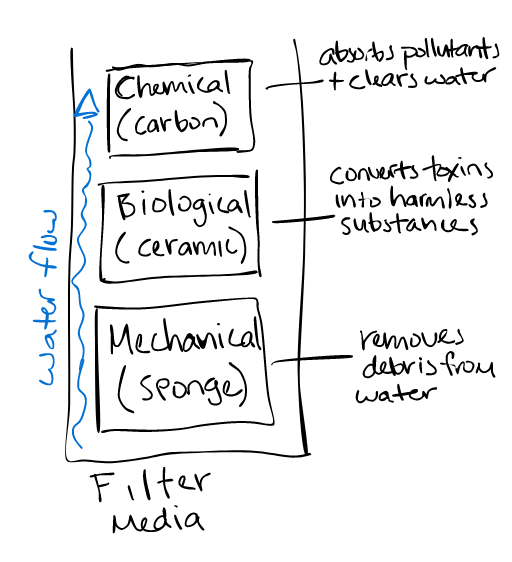
Before I break down the different types, I want you to understand why filtration is important. Filters don’t just keep your water clear – it keeps the water healthy. And it does that through mechanical, biological, and sometimes chemical means. All three are (normally) used in every filter.
Mechanical filtration is the most basic form of filtration. It relies on passing water through a material (typically a sponge) that traps solid waste and organic matter and allows the cleaned water to return back to the aquarium.
Biological filtration is home to colonies of beneficial bacteria that eat up toxic chemicals like ammonia and nitrites and convert them into much less harmful chemicals that won’t harm your fish. These colonies live in the ceramic cylinders in your filter because it’s extremely porous and provides a large surface area for the colonies to establish themselves.
Chemical filtration absorbs a wide range of pollutants from your water and is one of the greatest contributors to your tank looking crystal clear. Normally this filter media is activated carbon. There are some dangers to using this.
Filters (of all types) are responsible for maintaining a healthy balance of water chemistry and circulation.
Circulation of the water allows for oxygen and carbon dioxide on the water’s surface and distributes those gasses and nutrients to plants and animals. Now that you know the why, let’s check out the “whats” of aquarium filters so that you can decide which one is best for your tank.
Filter Type #1: Sponge Filters
A sponge filter only uses a sponge (mechanical filtration) as the filter media. The sponge traps debris and waste from the water, which helps to keep the tank clean and healthy.
These are typically used in shrimp breeding or fry tanks because the water flow is much lower than the other filter types. Sponge filters work by using air from an air pump to draw water through the sponge.
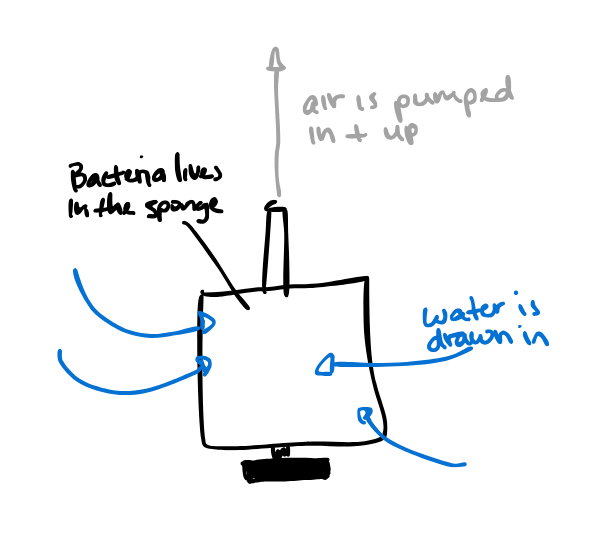
They’re very easy to maintain and install. To set it up, just connect your air pump to the filter using generic aquarium air hoses. For maintenance, every few months rinse out the sponge with old aquarium water. Very simple.
They’re quiet, gentle on fish, and live inside your aquarium. I used one of these in a buenos aires tetra fry tank and it worked great. And soon I’m setting up a cherry shrimp breeding tank in which I’m going to use that same sponge filter.
Since sponge filters are so simple, they’re normally pretty inexpensive. But since their flow rate isn’t very high, sitting in the middle of your tank, and taking up valuable space in your aquarium, they can’t be used on most tanks.
If you have a breeding tank or delicate fish that don’t like strong flow, sponge filters would be perfect for you. Otherwise, take a look at the other 2 filters.
Filter Type #2: Hang-on-Back Filters
Hang-on-back (HOB) filters hang on the back (or side) of your fish tank. If you’re new to the hobby and just set up your first aquarium, this is likely the filter that you have.

That’s the exact filter I had on my very first setup and I used it for years across many different tanks and scapes. They do everything you need pretty well and very affordably. And since they’re not inside your aquarium, they take up much less space inside it.
How do these work?
Water is drawn up from the aquarium into the filter by the pump and circulates through the filter media (biological and mechanical) before pouring back into the tank.
These filters work great on nano aquariums (tanks up to 20 gallons). I know there are HOB filters designed for tanks up to 50 gallons, but once you get up to those volumes, HOB filters lose their effectiveness.
To clean HOB filters, just remove the filter media from its compartment and rinse them in old aquarium water so you don’t kill the bacteria colonies living there.
For beginner aquarists, HOB filters are amazing first options. Cheap, reliable, and can fit most tanks.
Filter Type #3: Canister Filters
As you get into aquariums larger than 20 gallons, HOB filters will no longer cut it. You’ll need more space for filter media to handle the increased waste production of the tank and you’ll need higher flow rates to get optimal circulation. This is where canister filters come in.
Canister filters are a type of external filter for your aquarium. It sits outside your tank, typically below it in a cabinet or beneath the stand.

The way they work is very similar to the other filters we’ve discussed today … in principle. Water is drawn in by the pump, passed through the filter media, and returns to the tank.
But it’s different in that canister filters sit below the tank instead of inside or on the side of. This filter’s volume is also much larger than that of the other filter types.
This gives you more space for biological filtration to handle the waste of larger tanks. Plus the flow rate is higher AND – one of my favorite things about them – you can customize almost every part of it to suit your tank’s needs.
Canister filters are my favorite type of filter. They’re external, giving me more room for layouts, design, and fish inside the tank. They have larger volumes to house more beneficial bacteria to keep my water parameters balanced. And you can add or remove parts depending on your tank.
Extra space, more moving parts, and better performance puts this one at the top of my list. This is the canister filter I’ve used on all my tanks under 30 gallons.

| NOTE: Remove the chemical filtration from your filter once you get it. That’s because once the activated carbon absorbs all those harmful substances, it will start to release them back into the water column. Instead, replace that media with as much biological filtration as you can. |
This filter lasts for years if you treat them right and are much cheaper than the big brands for the same flow rate. All around, this one gets you the best value for your money.
Choose your filter based on the flow rate you need
You should consider these 3 things when choosing the filter you need (in order of importance):
- Flow rate (gallons per hour)
Your filter needs to be able to cycle through all the water in your aquarium at least 5 times in one hour. This is called the flow rate and its measured in “gallons per hour”
That means in a 20 gallon aquarium, you need a filter with a GPH of 100.
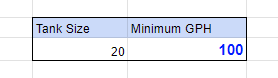
This way you know your filter is powerful enough to handle the size of your aquarium.
- The bioload of your aquarium
What is bioload? It’s a term that refers to all the waste inside your aquarium.
This waste comes from fish, shrimp, snails, even plants and microorganisms. Tanks with lots of fish and dense planting have big bioloads. Typically a filter with the right flow rate will be able to handle a corresponding amount of waste in that tank.
Are you worried you might not have enough filtration? Buy a filter that’s bigger than you need if you can.
- The function of your aquarium
If you want to have a shrimp tank, you probably only need a sponge filter. A 10 gallon betta tank .. an HOB is probably all you need. Larger tanks and aquascapes use canister filters since they’re the least visible in the aquarium.
So pick out your filter according to the type of aquarium you’ll have.
That wraps up today’s article. I hope you learned something that helps you buy your first filter or upgrade one you’re growing out of.
If you need any specific help with a filter, put your question in the comment section below or email me! I love answering all questions about aquariums, fish, and aquascapes.
Until next time,
Happy scaping.
Dom Blank

 The Aquarium Home
Leave a reply to How to Prep Your Aquarium for Vacation – The Aquarium Home Cancel reply